
Episode Summary
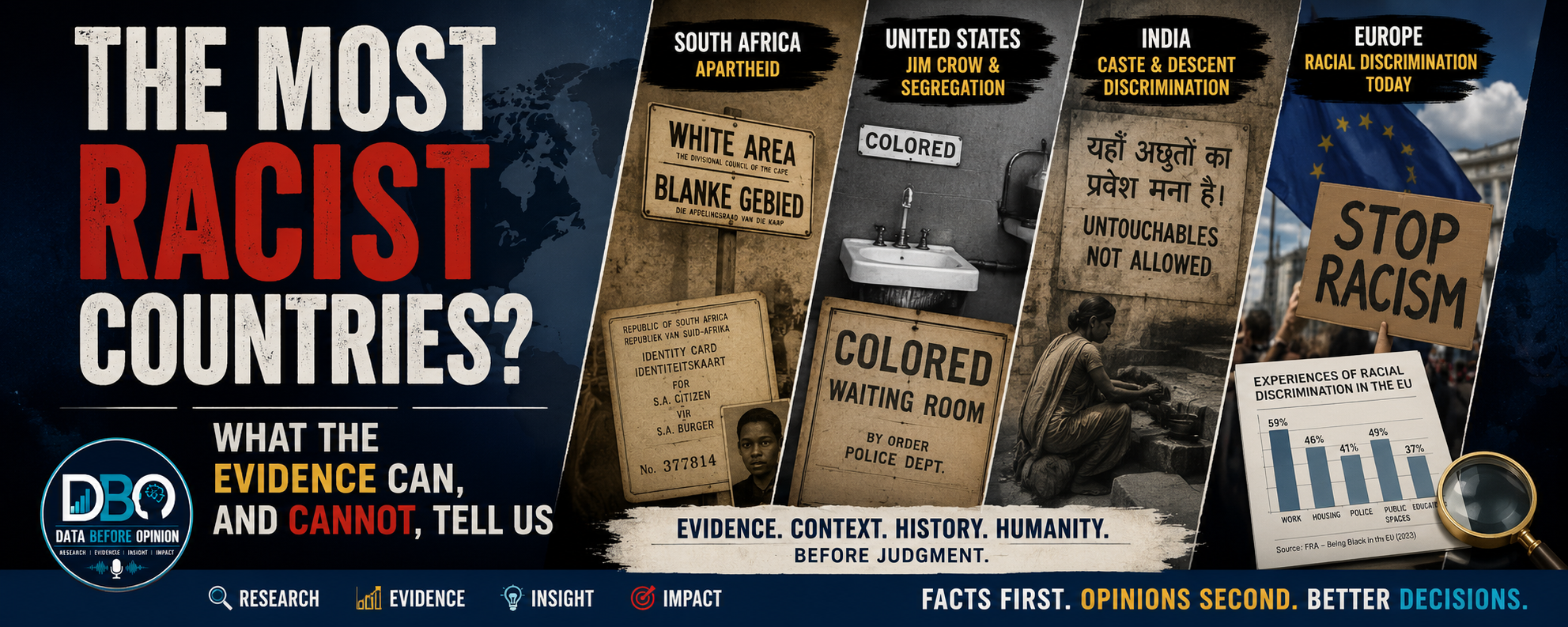
This episode explores one of the most controversial questions in discussions of race: Which are the most racist countries in the world? Rather than attempting a simplistic ranking, the discussion examines how racism is measured through public attitudes, reported discrimination, historical legal systems, and institutional outcomes. Using South Africa, the United States, and India as major case studies, and recent evidence from Europe, the episode explains why different measures often lead to different conclusions. The central message is that racism is multidimensional, making a single global ranking scientifically unreliable. Instead, the evidence should be used to understand how systems of exclusion are created, sustained, and ultimately dismantled.
Watch on YouTube